
by Brandon Agosto
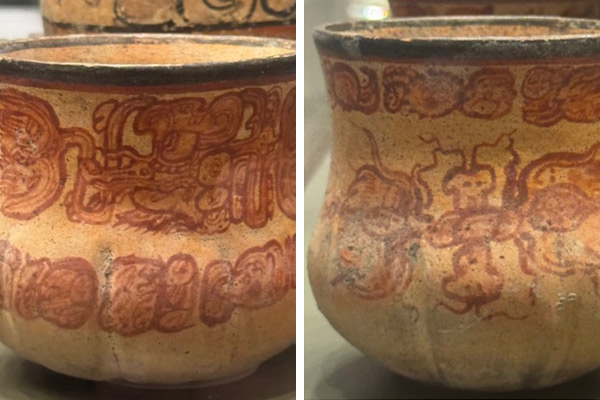
Fluted vessel featuring the waterlily monster. Maya, Northwestern Peten, Guatemala, Jay I. Kislak Collection, Ceramic and pigment, ca. 650–850 CE. 1991.178.00.0001.
This fluted drinking cup depicts a quadrangular, almost hieroglyphic representation of a zoomorphic deity head in profile. The figure is depicted with a curved pupil and a serpentine snout. From its nose emerges elements of a waterlily rhizome in bloom, with a thin red and cream line patterning to accentuate the flower and stalk. These features are characteristic of the Waterlily Monster or Serpent, a primordial figure rendered here as a still body of water and associated with the underworld. Depictions of the Waterlily Monster appear on many examples of seventh through ninth century Maya ceramics as personifications of water. Maya monuments depicting royal figures have utilized adornments depicting the Waterlily Serpent and royal titles that refer to the deity as potent manifestations of divine authority. A small fish is represented on the side of the ceramic body, with varying thickness of red lines to detail its dorsal fin and gill. It is seen facing toward the water lily, perhaps shown in the moment before it consumes the leaves, buds, or roots of this flower.
Below the Waterlily figure and fish is a hieroglyphic text that wraps around the cup’s body. These inscriptions are typically executed alongside along the rim of ceramic wares and a formulaic text known as the Primary Standard Sequence. The Primary Standard Sequence describes the ownership of the vessel, its maker, and the possible, ceremonial function of vessels used in the drinking of frothy cacao beverage. The presence of these inscriptions suggests the courtly artist’s familiarity with erudite hieroglyphic programs and its usage by royal figures to legitimate their authority and time of rulership.
The vessel was decorated using a red mineral paint made of iron oxide with an orange on cream palette using a quilled stylus to meticulously create its calligraphic lines. Although the precise location of manufacture is unknown, red on orange compositions are diagnostic of vessels produced in the Holmul-Naranjo polities in the Petén region of Guatemala. Painters from Holmul and Naranjo are known for executing calligraphic style using this singular color palette and creating elaborate mythological scenes that fill the entire compositional space. The fluted basal rim is reminiscent of a gourd, a type of serving vessel used in everyday consumption of liquids. However, this cup’s renderings including representations of animated water, fish in the act of foraging, and skillful knowledge of mythological imagery are suggestive of commemorating social authority in the act of consuming beverages during elaborate, courtly feasts.
How this object relates to my research: This drinking cup depicts calligraphic imagery of the Waterlily Monster, a type of supernatural deity depicted within El Tajín as well. This imagery allows me to consider the cultural transmission of images between Costal Veracruz and the Maya region as well as how power and authority are associated with variations of these mythological traditions, particularly within my research of the murals of Building I at El Tajín.
Further reading:
- Chinchilla Mazariegos, Oswaldo. Art and Myth of the Ancient Maya. Yale University Press, 2017.
- Finamore, Daniel, and Stephen D. Houston. Fiery Pool: The Maya and The Mythic Sea. Peabody Essex Museum, 2010.
- Houston, Stephen D., Oswaldo Chinchilla Mazariegos, and David Stuart. The Decipherment of Ancient Maya Writing. University of Oklahoma Press, 2001.
- Pérez de Lara, Jorge. “A Glimpse into the Watery Underworld,” The PARI Journal Volume V, No. 4 (2005): 1-5.
- Reents-Budet, Dorie. Painting the Maya Universe: Royal Ceramics of the Classic Period. Duke University Press, 1994.
- Stuart, David. “Reading the Water Serpent as WITZ’,” Maya Decipherment Blog April 13, 2007. https://mayadecipherment.com/2007/04/13/reading-the-water-serpent/.
 A Librarian